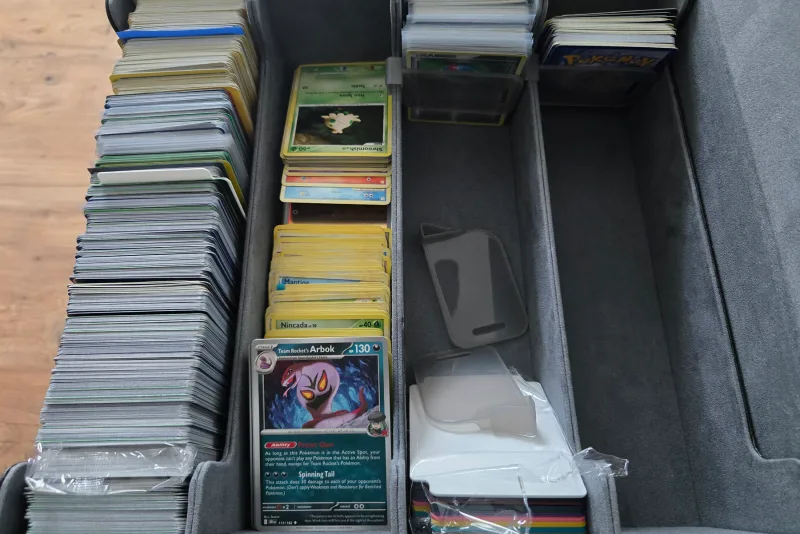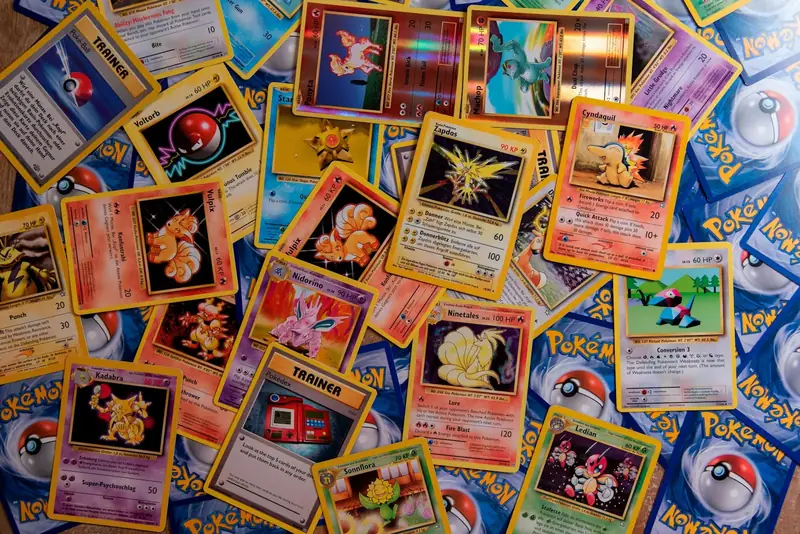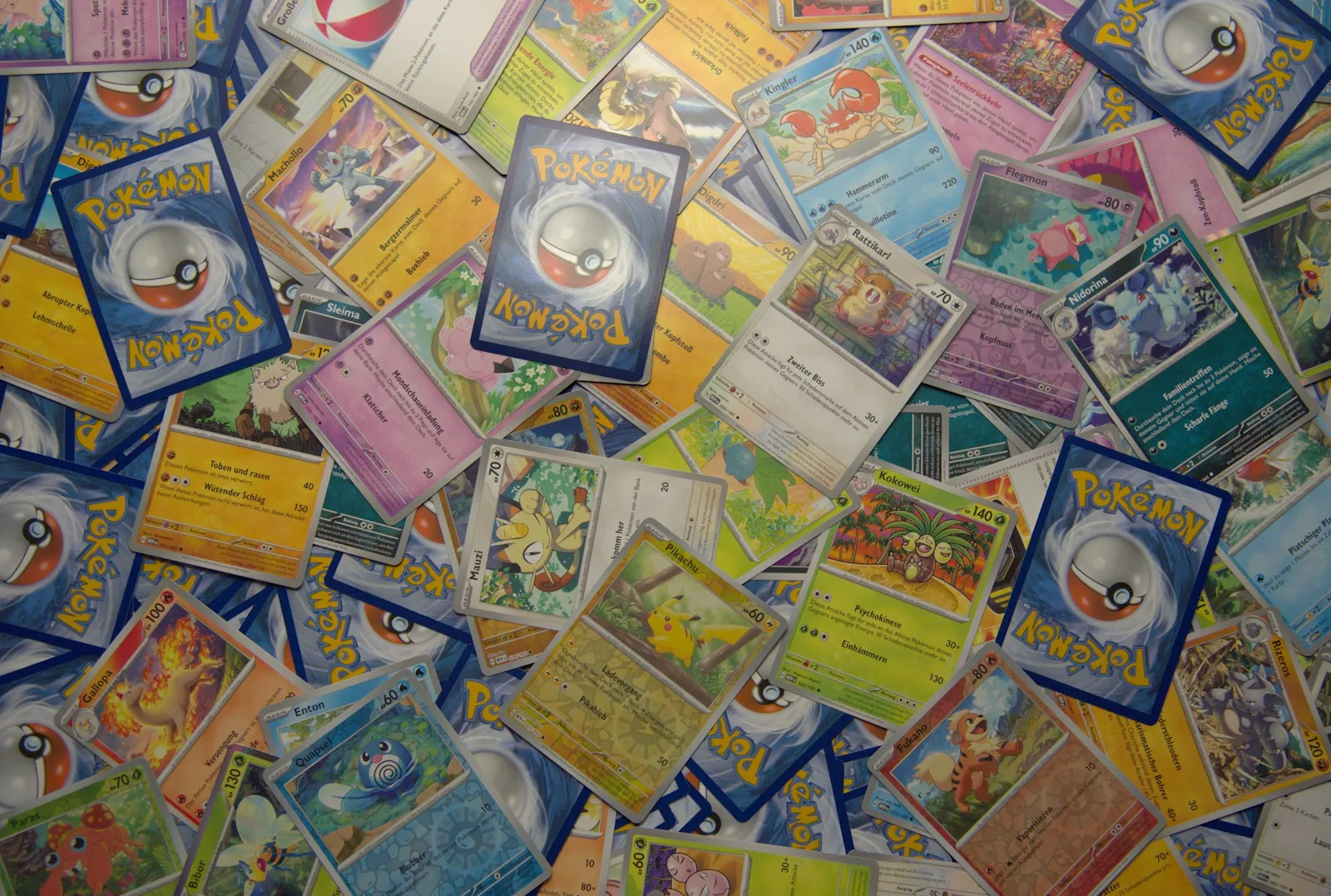
The honest way to answer what bulk Pokemon cards are worth money is to price all of them, so on September 14, 2026 we did. We pulled TCGplayer market prices for every Common, Uncommon and Rare printing across 38 Scarlet and Violet era and Mega Evolution era sets. Of the 6,519 printings carrying a live price, 321 were worth a dollar or more. Take out one small group of special foils and that figure collapses to 93 out of 6,048, which is a shade over 1.5 percent of everything printed at bulk rarity in three years.
The number that decides anything is not whether a card is worth something. It is whether the card beats what the pile already pays. Our board pays 2 cents a card on commons and uncommons and 5 cents on holo and reverse holo, read off our live rates this morning, so a card has to clear that by enough to cover an envelope and the twenty minutes of listing it. The median market price across those 6,048 printings was 20 cents.
One caveat on that median, because it changes what it means. It is the median across distinct printings, and not across the cards in your box. A real box is weighted toward whatever got opened hardest, so the typical card sitting in front of you is worth less than the typical entry on a list like this one.
What bulk Pokemon cards are worth money, measured on September 14, 2026
Three ordinary cards sat at the top once the special foils came out of the count.
The best of them is Snorlax, Crown Zenith 109/159, in its reverse holo printing. TCGplayer market was $12.13 against a cheapest live listing of $7.75, and 198 copies of that exact printing sold in the thirty days to September 14. It wears a black star, so a sort by symbol alone drops it in the rare pile at 3 cents.
Second is Gengar, Scarlet and Violet 151 094/165, reverse holo, at $9.60 market with the cheapest listing at $5.34, on 374 copies sold in the same window. Third is Metang, Temporal Forces 114/162, reverse holo, at $4.87 market and $3.79 cheapest. Metang moved 729 copies in thirty days, more than the Snorlax and the Gengar combined, which was the part of this that surprised us: the cheapest of the three is the one people are actually buying.
What the three have in common is that they are reverse holos of Pokemon people want, printed at ordinary rarity in sets that were opened by the case. None of that is written anywhere on the card. You get it from the set and the name, or you get it from looking the card up.
Night Stretcher, Shrouded Fable 061/064, reverse holo, came in at $2.80 on the same scan. That is the card TCGplayer's own seller blog put at the top of its April 2026 bulk list, and it is still near the top of ours, which is a fair sign the two counts are measuring the same thing.
The Master Ball pattern printings are the real money, and they are barely bulk
The special foils are the Master Ball and Poke Ball pattern printings, and the scan found 471 of them. Of those, 128 were worth five dollars or more. Across the other 6,048 printings, two were.
The top of the whole list at any rarity was Umbreon, Prismatic Evolutions 059/131, Master Ball pattern, at $78.42 market with the cheapest listing at $66.70. We opened the card image to check what a sorter would see: rarity symbol Rare, illustrated by matazo, numbered 059/131, sitting in the same rarity band as a Pidgey.
That is the expensive part. A box sorted by rarity symbol alone puts that Umbreon in the rare pile at 3 cents a card, and 128 printings are standing in the same position. TCGplayer's seller blog excludes special pattern reverse holos from its bulk list on purpose, which is a defensible editorial line and also why their top card and ours disagree by about seventy five dollars.
We are not going to teach you that foil from a scan, because the scan does not carry it. Flat scans never render a foil pattern, which is the same wall we hit when the cosmos holo line went on our board. The working rule is the one in our guide to sorting bulk Pokemon cards: when a card's foil looks unlike the reverse holos around it from the same set, look the card up before it goes in a pile.
Where to sell a bulk of 5 dollar Pokemon cards
This is where most guides stop, and it is the part that decides whether the sorting paid for itself.
TCGplayer publishes its Direct fee schedule on its own seller blog. Since June 18, 2026, a card selling at $2.49 or below pays a 50 percent fee, and anything above that pays a flat $1.12. The 2.5 percent transaction fee sits on top of both. Direct and Store Your Products carry a minimum price of $0.40, in place since February 10, 2026, and on that same date the marketplace commission for seller accounts went from 10.25 percent to 10.75 percent.
Run that against a three dollar card. About $1.20 of it is gone before you have found an envelope or walked to a post box, which leaves the card worth a little under two. Do that fifty times and the night has earned you around ninety dollars, which is real money and is also an entire evening.
So which of those fifty should you actually list? The ones over ten dollars, without exception, because the fee barely registers at that size. The ones in the one to five dollar band only if you are going to list a hundred of them in one sitting, since the packing and the postage are the same work at either end of that band. Everything under a dollar is finished arithmetic and counts on a buylist board at its category rate.
That bottom band is what a buylist is for, and the awkward middle is what our percentage lines are for. On Trainer Gallery and Illustration Rares we pay 80 percent of TCGplayer market, Near Mint only, with no fee per card and no postage per card, so a stack of two dollar and five dollar cards gets priced one at a time without any of the work above. The whole board sits on our page for people looking to sell bulk Pokemon cards.
What our board pays today, and what has moved since September 4
Commons and uncommons pay $20 per 1,000 in cash, and holo or reverse holo pays $50. Non holo rares sit at $30, and the cosmos holo line pays $100. Store credit runs 20 percent over cash on every line, because it is computed from the cash figure rather than typed in beside it.
Three lines have moved since our GameStop trade counter post quoted this board on September 4. VMAX and VSTAR went from 60 cents a card to a dollar. Gold foil secret rares went from a dollar to $1.25. The cosmos holo line did not exist on September 4 at all, and it now pays 10 cents a card, which is double the ordinary holo rate.
One line moved and came back. GX, EX and V ended September 7 at 75 cents, exactly where that line started the day, after a detour up to 90 cents. It came back down through 80 on the way. We print the whole walk because all three figures were served to real sellers on a live page, and the net on its own would hide two of them.
We run this scan again in October, and the interesting question is whether the Master Ball pattern cards hold. If you are buying rather than selling, the same finding is why a lot sold by weight and a lot sold by the card are two different products, which is the distinction behind our bulk Pokemon cards shelf.