GameStop buys Pokemon cards at its stores, and it buys exactly one kind of them: PSA graded, at a grade of 8, 9 or 10. We read that on September 4, 2026 off GameStop's own graded trading cards page, where the company says its team is trained to check PSA slabs for authenticity before it offers cash or in store credit.
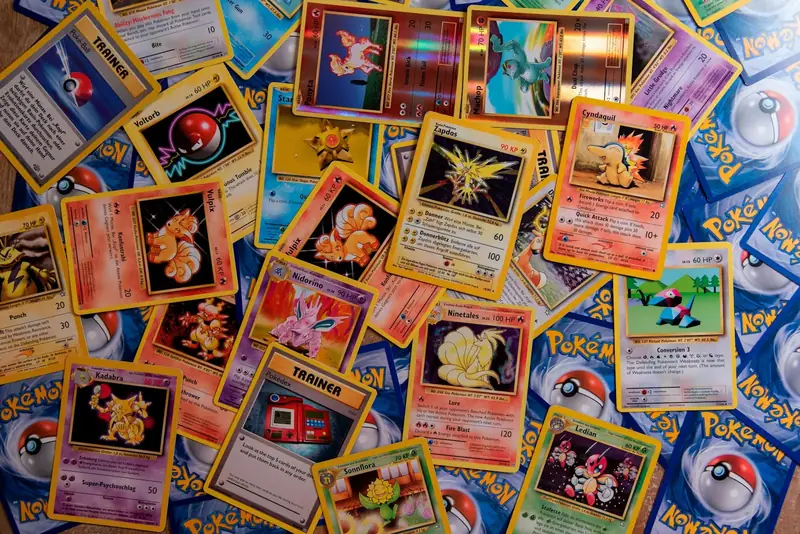
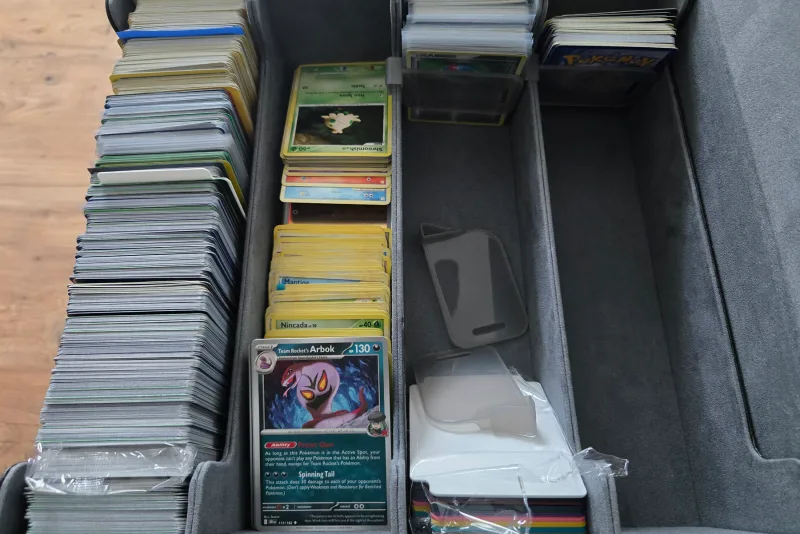
So, does GameStop buy bulk Pokemon cards? No. A shoebox of loose commons holds nothing their counter will scan, and a binder of raw holos holds nothing either.
Does GameStop buy bulk Pokemon cards? The terms in full
GameStop takes slabs only, and the terms are worth reading before anybody drives to a store.
Their graded trading cards FAQ says they accept official PSA graded cards carrying the Lighthouse label, and that at this time they are only accepting PSA graded trading cards. A BGS slab is outside the program, and so are CGC, SGC and every other holder on the market.
The floor is a grade of 8, which puts a PSA 7 outside the program too, and a raw card is outside it by definition.
They cap the payout at $1,500 in cash or in store credit for a card, and the page calls the offer final.
There is no maximum on how many cards you bring, but the FAQ says each card is processed and priced one at a time, so fifty slabs means fifty scans at the counter. The price comes from a model GameStop runs at the moment a card is scanned, drawing in part on data from Card Ladder, which is why the same card can quote differently on two visits a month apart. Pro members get 5 percent extra trade credit on a graded card.
If you are on the buying side of that counter, three things on the same page are easy to miss: graded cards are sold online only, they never qualify for free shipping, and they are final sale.
What it costs to get one bulk card into a PSA slab
This is the part that decides whether the program is any use to somebody sitting on bulk, and it is the part the other pages answering this question skip.
PSA's own trading card grading page carried a banner on September 4, 2026 saying Value services are temporarily paused because of extraordinary demand, and Value was the cheap tier. With it gone, the cheapest option PSA publishes is Regular at $79.99 a card, with an estimated turnaround of 70 to 80 business days.
So the cheapest door into GameStop's trade counter today runs about eighty dollars a card and roughly four months of waiting, before postage in either direction and before a grader decides the card is a 7. That cost is survivable on a card already worth a few hundred dollars, and it is not survivable on anything that came out of a bulk box.
What a buylist pays for the box GameStop turns away
That box is what a bulk buylist is for, and the shops worth using publish their rates where you can read them before packing anything.
We used to be one of them. We are not any more: our mail in buylist closed on October 1, 2026 and bulk buying is moving to an in person storefront, with no date announced. Sorted commons and uncommons paid $10 to $30 per 1,000 in cash across the shops with published rates when we last read them, and our price guide carries each one with its read date.
Above that the board is priced per card in practice. Amazing Rares and baby shinies bring 50 cents each, VMAX and VSTAR bring a dollar, the GX, EX and V class, the full arts and the Pikachu ultra rares all sit at 75 cents, and gold secret rares reach $1.25. Trainer Gallery cards, Illustration Rares and rainbow foils are not flat at all: they pay 80 percent of the card's TCGplayer market value, priced when the box is counted, floored at a dollar and two dollars a card, and Near Mint only.
Where to sell Pokemon cards compares every channel, including the shops that do still buy bulk by mail. If you came at this from the other direction, our page to buy bulk Pokemon cards stacks copies of one specific card with the per card price dropping as the count climbs, which is a different animal from a random thousand card lot.
Sorting is the one thing a seller fully controls, and it is what lifts a box off the bottom line of that board. The pass we ask people to make is written up in how to sort bulk Pokemon cards for a buylist, and it costs an afternoon.
Our commons rate went down since our last post
We put a different number in print at the end of August, so here it is plainly.
Our August 31 edition paid $25 per 1,000 for sorted commons and uncommons. Today the same line pays $20, and the separate unsorted rate we published then is off the board entirely.
That is a cut. We would rather say so out loud than leave an old number sitting in a post nobody rechecks, and every shop rate we read on the day we made the change is written down in our Pokemon bulk prices guide, which we refreshed the same afternoon.
The summary is short either way. If you own a PSA 9 worth a couple of hundred dollars and there is a GameStop nearby, their counter is a real option and a fast one, since the money is in your hand the same visit. If you own a monster box, GameStop has nothing for you, and no amount of grading fees will change that.
We will read their page again when the terms move, and we will say so here if GameStop ever starts taking raw cards.