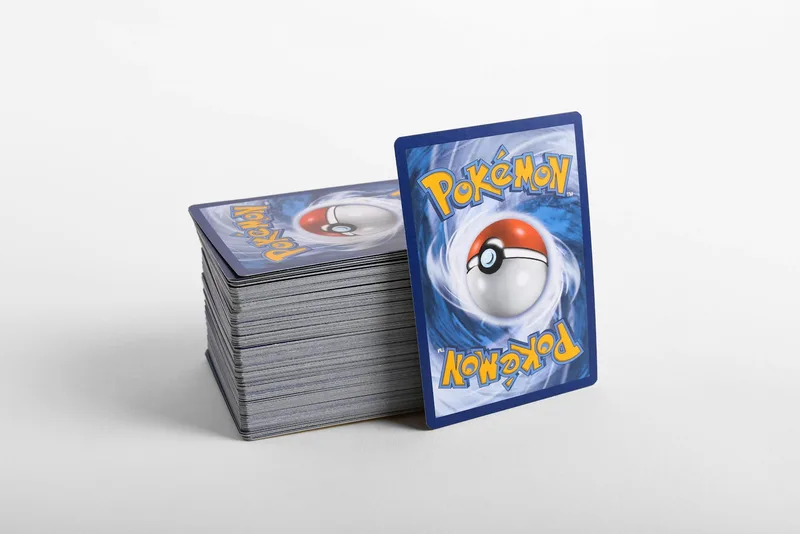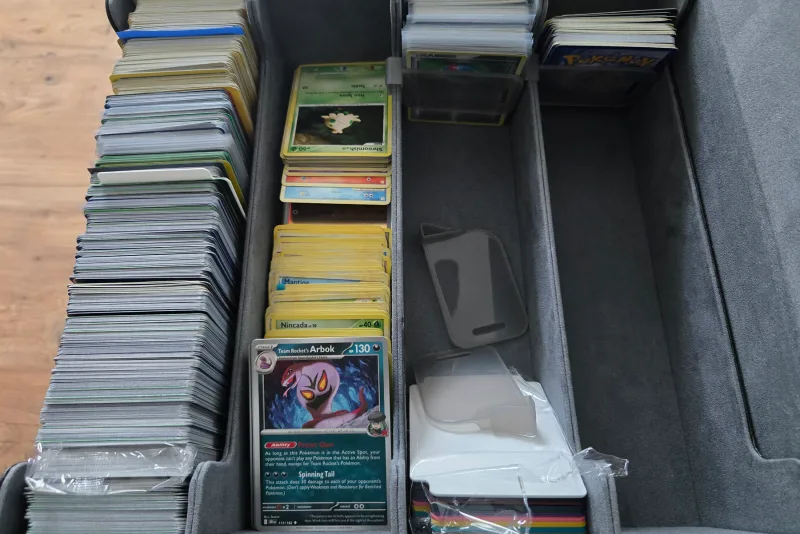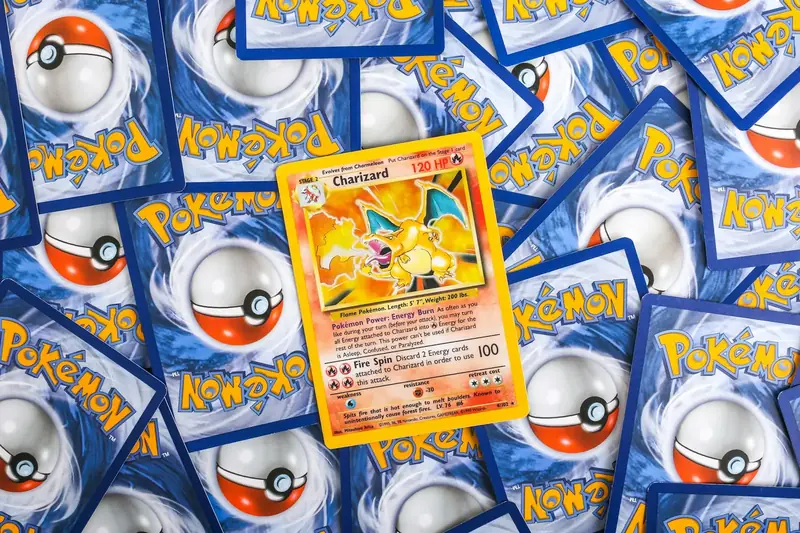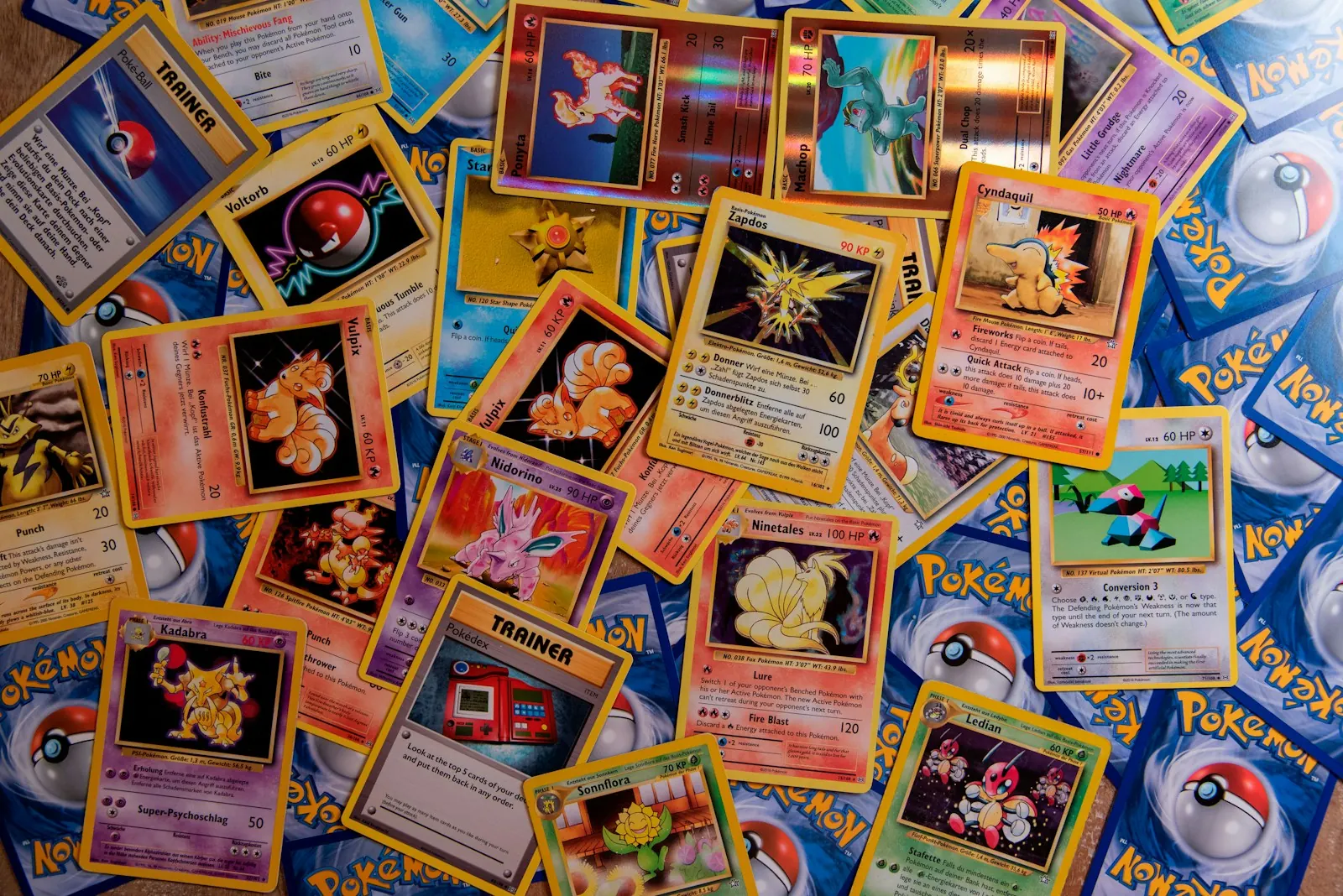
Pokemon bulk prices for sorted commons and uncommons run from $10 to $30 per 1,000 cards in cash, depending on whose buylist you use. Every figure below was read off the shop's own live page.
We do not buy bulk any more, so none of these rates are ours. Monster & Shield ran a mail in buylist until October 1, 2026 and has closed it; bulk buying is moving to an in person storefront with no date announced. That makes this guide what it should probably always have been: a comparison of other people's rates with nothing of ours to sell alongside them.
This is a living guide. We refresh it at this same address and re-read every shop's published rates on the day we update, rather than trusting our own last edition.
Pokemon bulk prices by tier
Bulk is not one price. Shops sort cards into tiers and the tier decides the rate, so the most useful thing to know is that the tiers above commons are where the money is. Across the nine shops in this guide:
| Tier | Typical range (cash per 1,000) |
|---|---|
| Commons and uncommons, sorted | $10 to $30 |
| Commons and uncommons, unsorted | $5 to $10, where offered at all |
| Holo and reverse holo | $10 to $60 |
| Non holo rares | $30 and up |
| The ex, EX, GX and V class | 30 cents to 50 cents a card |
| VMAX and VSTAR | 45 cents to $1.50 a card |
| Trainer Gallery and Illustration Rare | 20 cents to $1.00 a card |
| Gold, rainbow and secret rares | 50 cents to $5.00 a card |
The pattern to notice is that the top tiers are priced per card in practice, because nobody ships a thousand rainbow foils. They ship six, and those six are worth pulling out of the pile before you do anything else with it.
What other shops pay
Cash per 1,000 for sorted commons and uncommons. Every line below was read off the shop's own live page, not from a summary or a comparison table, because the cross store comparison charts that circulate for this were wrong in both directions on the day we checked. QuickFlips was re-read on September 7, 2026; the other eight were read on September 4, 2026.
- Kruk Cards pays $30, and it is the outlier here: they do not run a rarity ladder at all. One flat 3 cents a card covers the whole box, no more than 10 percent of it energy, submitted in 3,200 or 5,000 count boxes. Best rate in this list for a box of pure junk and the worst by far for a box with ultra rares in it (their buy prices).
- Troll and Toad pays $20, or $27 if you submit by their 1,000 count lot item rather than per card. Theirs is the most granular ladder anyone publishes, 27 Pokemon bulk categories, and the top of it is unmatched: $5.00 for Hyper Rare VMAX and Gold Rare VSTAR, $1.50 for VMAX, $1.00 for VSTAR and for Trainer Gallery and Illustration Rare (their buylist).
- Full Grip Games pays $20 with no sorting required, and adds 30 percent for store credit, which is the most interesting offer in this list. Their per card lines are modest: 50 cents for ex, GX, V, VMAX and VSTAR alike, 50 cents for Illustration Rares, 25 cents for full art Pokemon (their bulk buylist).
- Meta TCG pays $20 out of Arlington, Texas, cash by PayPal in 3 to 5 business days. Their reverse holo and holo rare lines are 3.5 cents, their EX, V and GX lines 50 cents, VMAX and VSTAR 75 cents, and Illustration Rares 25 cents. They also pay the highest basic energy rate we found, $5 per 1,000, on a card most shops refuse (their bulk page).
- QuickFlips pays $20 sorted and $10 unsorted, with a per card ladder from 3 cents for non holo rares up to $2.00 for rainbow foils. Their page is a JavaScript shell, so it will not render if you fetch it with a plain tool; open it in a real browser (their cards page).
- Untapped Games pays $15, and warns of a 50 percent sorting fee if the box arrives sorted wrong. Their ultra rare lines run 35 cents across GX, V, VSTAR, VMAX and the EX class (their buylist).
- Cape Fear Games pays $15 in Wilmington, North Carolina, plus 30 percent for store credit. They ask for neat rows in a box and no bags or wrap, and they reserve the right to pay half if the box is not mostly Near Mint. Secret rares are their strong line at $1.00 (their bulk buylist).
- Gray Gauntlet Games pays $10 sorted and $5 unsorted, and charges $20 a box if you skip the sort. Their top tiers are wide: Illustration Rares at 20 cents, the ex, EX and GX class at 30 cents, VMAX and VSTAR at 45 cents, hyper and rainbow and secret rares at 50 cents (their submission page).
- Card Cavern publishes no plain commons rate at all; they buy only the foil and ultra rare categories, and their hyper rainbow rare line at $2.25 is the second highest we found. Their buy requests were paused on the day we read them (their bulk buylist).
Two caveats before you pick a shop. Several of these are in store rates, so the gas or the postage comes out of your side. And the spread on the top tiers is far wider than on commons: a rainbow foil pays 50 cents at Gray Gauntlet, $2.00 at QuickFlips, $2.25 at Card Cavern, and $5.00 at Troll and Toad. Reading two or three buylists before shipping a big collection is an hour that pays for itself several times over.
Why the same card pays different amounts
The usual mechanism is sorting labor, and the shops split into two camps about it. One camp pays less for an unsorted box because somebody there has to do the sort: Gray Gauntlet is $5 against $10, QuickFlips is $10 against $20. The other camp prices the sort into one number and stops talking about it, which is what Kruk Cards does at a flat 3 cents and what Full Grip Games does by asking for no sort at all and still paying $20.
The distinction matters when you compare two buylists: a shop that pays less for an unsorted box is discounting your labour, while a shop that requires a sort is setting a condition of sale. Those are different things wearing similar numbers.
The bigger number is not on the commons line at all. A holo pays two and a half times a common and a rainbow foil pays a hundred times one, and those cards only reach their own lines when they are in their own piles. Whoever you sell to, sorting a box in one pass is the highest paid hour in this whole process.
Store credit is the other lever. Most shops pay 10 to 30 percent more in credit than cash. Credit only makes sense if that shop sells something you actually want, so look at their shelves before you take a premium that can only be spent there.
Buying bulk quantities of one card
Buying bulk is a different market from selling it, and it is the side we are still on. We sell bulk quantities of the exact card you pick rather than blind assortments: every card page carries a price break table, and the per card rate steps down at 4, 10, 25, and 100 copies, ending 40 percent under the base price, so a $0.99 common runs $0.59 a copy when you take 100. If you are stocking a classroom, building playsets, or speculating on one artwork, the deepest stacks live on the bulk quantities page.
What to do with this in the next week
Pull anything with a V, ex, VMAX, VSTAR, full art, Trainer Gallery, Illustration Rare, gold or rainbow frame out of your pile first. At 20 cents to $5.00 each depending on the shop and the frame, a dozen of those cards outweigh several thousand commons. Then sort the rest by category, because every buylist on this page pays by category and the pile a card sits in is the price it gets. Price your pile against at least two published buylists and ship to whichever pays best for your actual mix. Where to sell Pokemon cards compares the channels as well as the shops.
FAQ
How much is Pokemon bulk worth in 2026?
Sorted commons and uncommons bring $10 to $30 per 1,000 in cash at shops with published rates as of September 7, 2026. Holos and reverses bring $10 to $60 per 1,000, and the ultra rare tiers spread from 20 cents to $5.00 a card depending on the shop and the frame.
Is Pokemon bulk worth more sorted or unsorted?
Sorted, everywhere it is priced both ways, and at some shops there is no unsorted option to choose. The commons line is only the visible half of it. Sorting also lifts the holos, rares and special frames onto their own lines, and those are worth two and a half to a hundred times a common, so the pile you pull out of the box is usually worth more than the box it came from. The one exception in this guide is Kruk Cards, whose single flat rate pays the same whatever is in the box, which is generous on junk and painful on hits.
Do bulk prices change over time?
Yes, sometimes within a week, which is why this guide carries a read date on every number and gets refreshed at this same address. Treat any bulk rate you find without a date on it as unknown rather than current, including the ones in cross store comparison charts: the charts circulating when we checked were wrong in both directions.