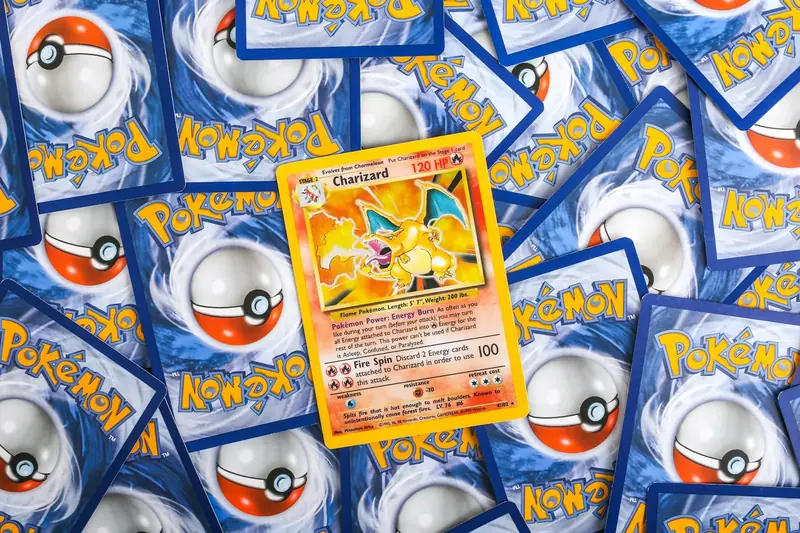
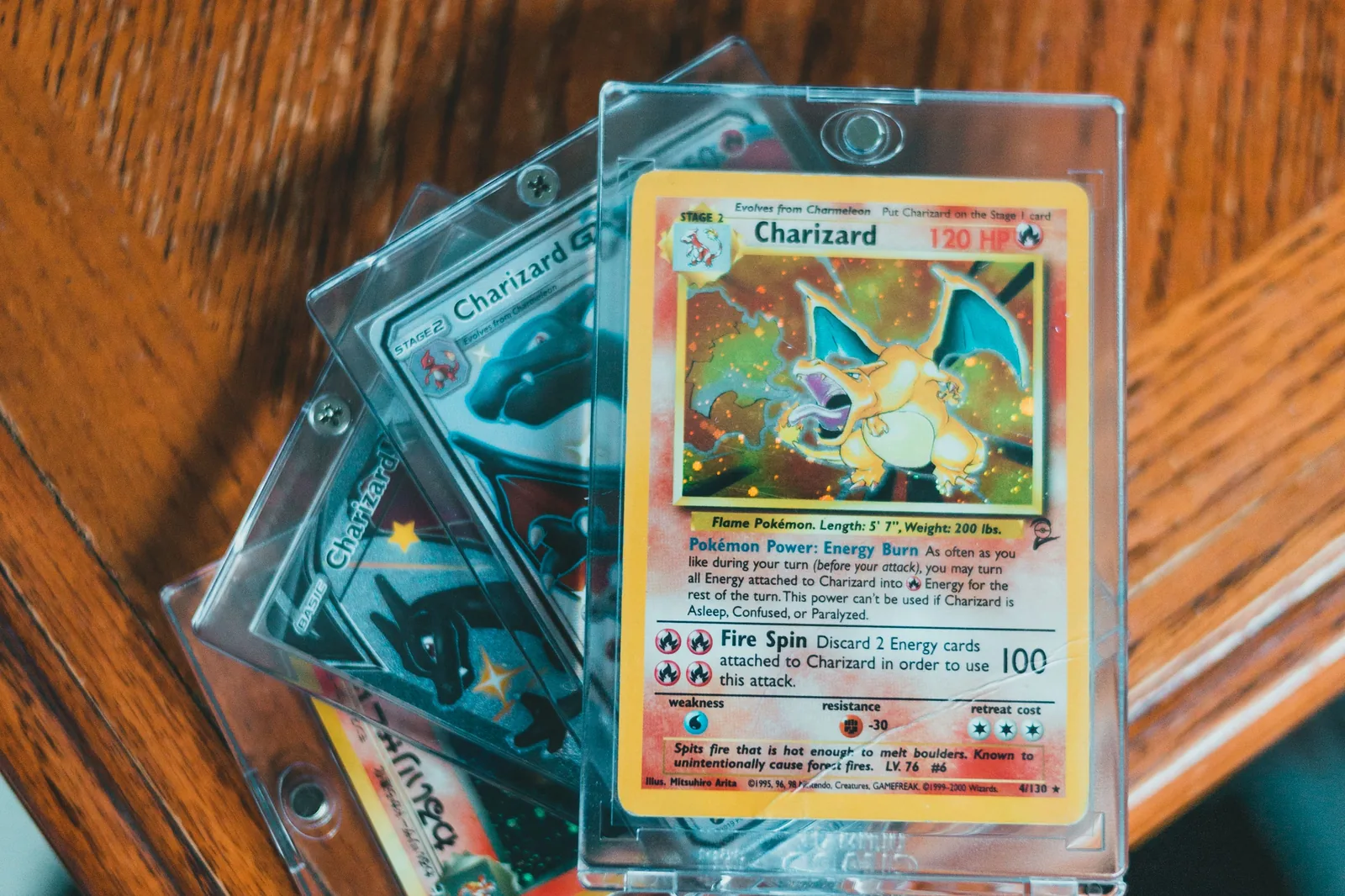
Does GameStop buy raw Pokemon cards? No. We read their graded trading cards page on October 23, 2026, and the FAQ settles it in one line: at this time, we are only accepting PSA graded trading cards. Sleeved, toploadered, kept in a binder since 1999 or pulled mint this morning, it makes no difference at the counter. The card has to be sitting in a PSA slab before anybody there can scan it.
So the question underneath the question is whether paying to have one graded is worth it. That part has an answer too, and it is mostly no.
What that counter takes, and what it pays
PSA only, at a grade of 8 or better. The FAQ says GameStop accepts official PSA graded cards carrying the Lighthouse label and offers cash or in store credit on cards rated 8, 9 or 10. A BGS, CGC or SGC slab is outside the program, and a PSA 7 is outside it as well.
A ceiling of $1,500 for one card. That is the most GameStop will pay in cash or store credit, and the FAQ calls the offer final. There is no haggling at the trade desk.
A price worked out while you wait. GameStop runs a pricing model at the moment your card is scanned rather than reading from a fixed list, and says the data comes in part from Card Ladder. The same card can quote differently on two visits a month apart.
No limit on how many you bring. The FAQ says there is no maximum number of cards, but each one is processed and priced individually, so forty slabs means forty scans.
One thing worth checking before anybody drives anywhere. On October 23, 2026 the banner across the top of that page said Pros get 5 percent off and a 15 percent trade in bonus, while the Pro question further down the same page said Pros get 5 percent extra trade credit when trading graded cards. The FAQ answer is the one written about graded cards specifically.
Does GameStop buy raw Pokemon cards once you have paid to grade one?
Then it will, and GameStop sends you down that road itself. Asked where to get cards graded, the FAQ answers that it is only accepting trades from PSA, and points at the PSA booths that turn up at card shows and conventions. So here is what that road costs.
PSA's pricing page on October 23, 2026 still carried the notice that Value services are paused. The cheapest tier it publishes is Standard at $59.99 a card, insured to $1,000, with an estimated turnaround of 90 to 100 business days. The rung above it, Priority, runs $79.99 with a 70 to 80 business day estimate. Either way you are four or five months from seeing the card again, and the fee is charged whatever number ends up on the label.
Now set that against what a grade is actually worth, using PriceCharting read the same day.
A grade 8 does not pay for itself. Charizard ex 199/165 from Scarlet & Violet 151 sat at $305.00 ungraded on October 23, 2026, and its grade 8 column read $301.25. The fee is spent and the card is worth about what it was worth raw.
A grade 9 usually does not either. That same Charizard reads $358.00 at the 9. The $53.00 of lift does not cover a $59.99 fee. Pikachu ex 238/191 from Surging Sparks moves from $249.99 raw to $285.00 at the 9, which is thinner still.
Only a 10 pays. Charizard ex 199/165 jumps to $1,284.99 in a PSA 10, and that Pikachu ex reaches $748.50. Nobody at PSA will tell you which grade is coming before you have paid for it.
The ceiling bites exactly the cards worth grading
Read those two facts together and GameStop's trade counter has a shape to it.
The cards where grading clearly wins are the ones a PSA 10 carries into four figures. Those are also the cards most likely to run past the $1,500 limit, and the limit is a hard stop rather than a starting point. PriceCharting had Umbreon VMAX 215/203 from Evolving Skies at $3,750.00 in a PSA 10 on October 23, 2026. Ungraded, the same page put it at $1,725.00, which is already above what GameStop would hand over for the slab.
So the trade counter suits a narrow band: cards good enough that a 10 is worth chasing, and ordinary enough that a 10 still lands under the ceiling. Outside that band it is either the grading fee or the limit taking the difference.
Where raw cards actually go
GameStop is one counter and it is built entirely around slabs, so for a raw card the honest list is shorter than it looks. We wrote it out in where to sell Pokemon cards, which compares local shops, mail buylists, eBay and TCGplayer with the fees attached to each. Our own mail in buylist closed on October 1, 2026 and bulk buying is moving to a physical storefront, so there is no board of ours tilting that comparison.
If what you are holding is a box of commons rather than a handful of good singles, that is a different question with a worse answer, and it is in does GameStop buy bulk Pokemon cards. From the other side of the desk, the graded slabs on our own shelf are the finished version of all of this, with the fee already paid and the grade already printed on the label.
The figure we printed in September is already wrong
We put a grading price in print seven weeks ago, so here it is plainly.
Our September 4, 2026 post about this same trade counter said the cheapest door into PSA was Regular at $79.99 a card with a turnaround of 70 to 80 business days. Both halves have moved since. PSA renamed Regular to Priority, and on September 14, 2026 it opened Standard underneath at $59.99, which is why this post quotes a cheaper fee and a longer wait than that one did.
What falls out of the whole exercise is a window with two edges. A card has to be worth enough in a PSA 10 to cover a $59.99 fee, four or five months of waiting and a real chance of coming back a 9, and it has to be worth under $1,500 in that 10 for GameStop to be the right place to take it. Most raw cards miss that window at one edge or the other.